

The current policies of the U.S. Governmentare undermining its comparative advantagein education, technology,military, movies and agriculture.Patrick Drennanreports.
A COMPARATIVE ADVANTAGEexistswhen a country can produce goods at a lower opportunity cost compared to other countries.
America has economic comparative advantages in services such as:
- insurance and finance;
- beef, corn and soya beans;
- movies and popular music;
- arms and space technology;
- oil and natural gas; and
- software.
The U.S. has these advantages because of its highly varied and industrialised land mass, advanced labour skills and creativity, the best institutions of higher education and financial wealth and backing.
It does not have comparative advantage in large-scale,labour-intensive industries like textiles, footwear, cellphone and computer manufacture, generic medicines and tropical foods such as bananas, rice and cocoa. Unless America imports cheap labour, artificially alters its land mass in tropical states like Hawaii, or uses vast amounts of government (taxpayer) money to fund these industries, it never will.
Few countries have the same natural resources, infrastructure, skilled labour force, or technology to compete with America, but they have their own advantages.
The policies of the current U.S. Administration endanger Americas comparative advantages, especially in education, technology, the military, movies and agriculture.
Tariff tensions see rise in regional resilienceAs global trade tensions escalate, Asia-Pacific economies must rethink strategies to protect growth, jobs and development gains.
Education
The U.S. has cornered the market onhigher education, accounting for around one-third of the top 100 universities. TheCenter for Strategic and International Studiesfound that the stay rate for American temporary visa holders with science and engineering doctorate degreeswas approximately 71 per cent after five years.
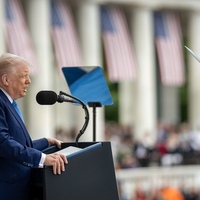
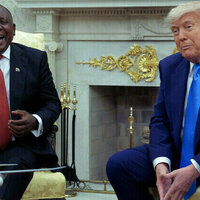
However, growing visa rejection rates amidst changing U.S. immigration policy, along with executive orders targeting education, including U.S.President DonaldTrumpsvendettaagainst Harvard, are impacting sentiments.
Since Trumps return to office, his administration hasrevokedmore than a thousand student visas, often without explanation. International students are now looking for the best universitiesoutsidethe United States.
It is not just the students 75 per centof U.S. scientists who answered aNaturepollhave consideredleaving America for Canada or Europe.
Technology
The American technology business has always been led by large, dominant firms. Companies such asIBM, Google, Intel, Microsoft, Apple, Meta, and Amazonhave established markets, set standards, leveraged scale economiesand supported long-term, tax-exempt research and development. This advantage allows the U.S. to produce high-value tech products at competitive costs and drive global trade in advanced technologies.
The main reason for this comparative advantage is that the U.S. has a large and highly skilled workforce, particularly in STEM (science, technology, engineering, and mathematics) fields.This allows for the development and implementation of complex technologies.
The main challengeto America sustaining its technological advantage is losing its skilled labour force.
According to the National Science Foundation's (NSF)2024Indicators Reporton the state of U.S. science and engineering, foreign-born workers comprised approximately 19 per cent of the overall U.S. STEM workforce in 2021.
AI
In January 2025, the arrival of the Chinese-builtDeepseek-R1a rival to OpenAI's ChatGPT and Google's GeminishockedAmerica because it had been developed for only $6 million using cheaper, legacy semiconductor chips, rather than the fastest graphic processing units (GPUs), which are made by Californiantech companyNvidia.
Artificial intelligence applications are software programs that useAI techniquesto perform specific tasks. Theyare increasingly valuable in healthcare, education, the military, finance andmanufacturing.
The foundations ofthe chatbot training method, known as"reinforcement learning", wasdevelopedwith NSFgrants.
But the Department of Government Efficiency (DOGE) has frozen, cancelled, or otherwise slowedbillionsof dollars in grants and firedhundredsof staff from the federal agencies that have funded the nations pioneering academic research for decades, including the National Institutes of Health and the NSF.
Military
In 2025, America willspend$895 billion on the military. Thiscoststhe average American taxpayer about $5000 per year. Consequently, America leads the world in sophisticated military technology and equipment.
The U.S. military's comparative advantage stems from its advanced technology, robust logistical support, AI and a vast alliance network the latter of which is under threat by isolationist policies.
No other nation can currently produce weapons like the Patriot air defence missilesystems,M142 HIMARStruck-mounted missiles,ATCAMlong-range missiles and the seemingly irreplaceable Bradley fightingvehicles. Russia, China and AmericasNATO alliesare racing to catch-up.
Nevertheless, more American allies are turning to other arms manufacturersto resupply their military.For example, Poland bought South Koreantanks; theCzech Republic, Hungary and Colombia bought Swedish JAS 39 Gripen fighter jets;and Australia boughtSpanish air-tankers, in billion dollar deals. Arguably the foreign alternatives are cheaper, flexible, just as modern and delivered on time and on budget. The costoverrunson Americas new F-35 jet fighters are a prime example.
Movies
On May 5,Trumpannounceda 100% tariff on movies produced outside the country, saying the American movie industry was dying a "very fast death". Since then, there has been no further comments or details on how this would work.
Trump lamented the fact that many Hollywood movies were now being filmed overseas. High-profile examples of so-called runaway production atermdescribing the flight of movie production from Hollywood, can be found in the UK.WickedandBarbie, two of the biggest blockbusters of recent years, were principally shot in studios in the south-east of England.
According toProdPros 2025surveyof studio executives, when asked what they considered the top criteriawhen selecting a filming location, tax incentives were the main consideration.
Production tax incentives, however,are not only available in other countries, but 27 Americanstatesother than California offer tax incentives. States with rich credits include Louisiana, New York and Georgia, thehomeof the Marvel film series.
Despite the hyperbole, the financing and distribution of movies remainin America.
The Hollywoodbig fiveproduction companies and the top moviedistributorsincluding online distributors such as Netflix, Apple TV+, and Disney are predominantly American-based and owned.
On CNN, former Republican congressmanJim Renaccideclared:
Adani, Trump and the undoing of global anti-corruption normsTrump's suspension ofthe Foreign Corrupt Practices Act has signalled to business elites that compliancewith anti-corruption laws is optional for the well-connected.
Agriculture
The American federal governmentspendsmore than $30 billion a yearon subsidies for farm businesses and agriculture.
The2025 Farm Billwas an opportunity for Congress to rethink the extensive subsidies provided to agriculture. The subsidies can distort the economy, harm the environment, and flow mainly to the largest producers. In 2021, the average income of all farm households was $135,281, which was32 per centhigher than the $102,316 average of all U.S. households.
However, without the subsidies, American farms and ranches would struggle to survive. On top of that, overseas producers are catching up.
In the last decade, the United States has supplied the most beef to the world. Now, according to the U.S. Department of Agriculture(USDA), the U.S. now supplies 20% of the world's beef, with Brazil supplying 19%, and China 13%.
Interestingly, Brazilian companyJBS S.A, the worlds largestmeat processing enterprise, owns beef and poultry processing plants in 14 American states as well asPuerto Rico, andclaimsAmerican subsidies and tax breaks.
New Zealand ended most of its farm subsidies in the 1980s, which was a bold reform given that the country is much more dependent on farming than the United States. Farm productivity, earnings, and environmental practices allimprovedafter New Zealands reforms, while farmers cut costs, diversified land use, sought nonfarm income, and developed new markets.
To put that in perspective, the United States exported $178.7 billion in agricultural products in 2023, New Zealands agricultural export revenue was about $US35 billion in the year to 30 June 2023. Australian farmers, second only to New Zealand in the least subsidised country, exported $US56 billion in agriculture, fisheries and forestry products in the 202223 financial year.
TheCato Institutecame to thisconclusion:
For now, America will maintain a comparative advantage in the industries above. However, this will erode as overseas competitors continue to leverage advanced education, technology like AI and cheap labour forces to counter these advantages.
Patrick Drennanis a journalist based in New Zealand, with a degree in American history and economics.
Related Articles
- American politics in a state of chaos