

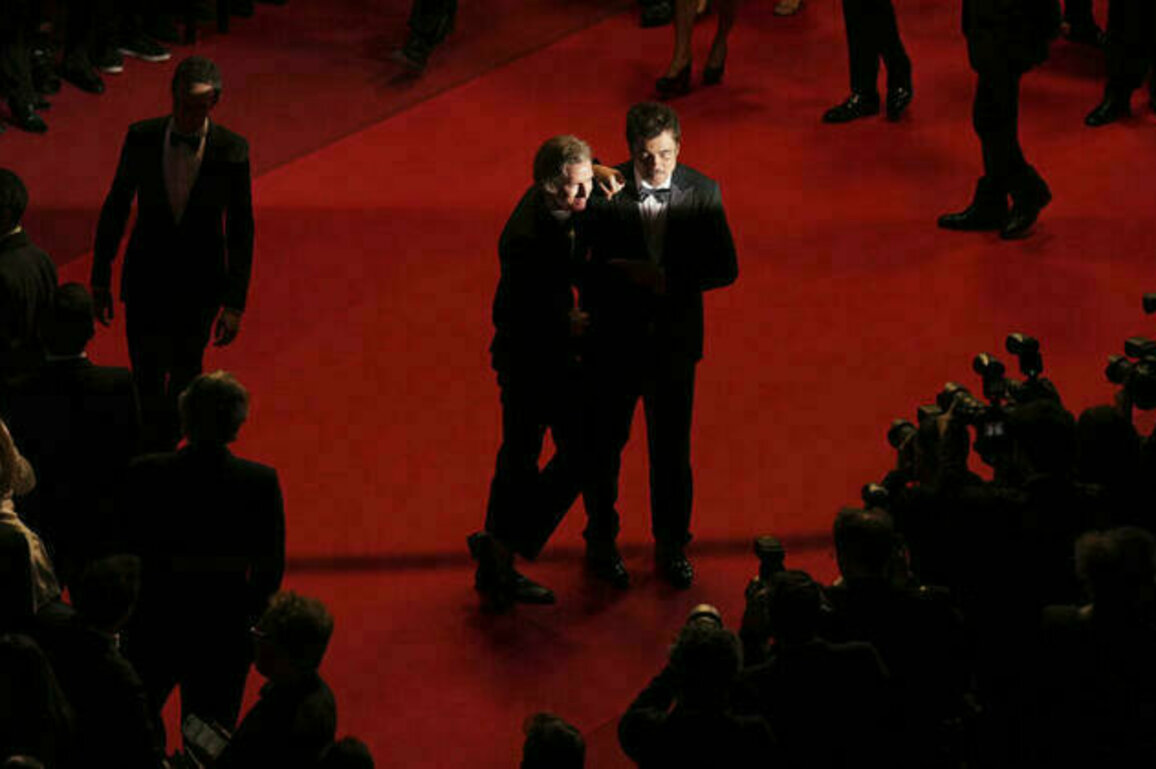
US President Donald Trumps threat to slap crippling tariffs on foreign-made movies has dominated discussions at the Cannes Film Festival, dampening the mood at the film market that runs parallel with the festival and frustrating movie professionals who were looking for a boost from cinemas glitziest showcase.
The franticFrench Riviera gatheringtypically slows down midway through its second week, when the worlds busiestfilm market draws to a close and cinemas dealmakers pack up and head home.
Deep in Cannes Palais des Festivals, beneath the iconicred carpetand movie theatres, the film markets sprawling maze of booths, conference halls and screening rooms was mostly an empty shell by late Wednesday, with only a few diehards holding out.
They included the team from LA-based production and distribution company California Pictures, whose box was still a beehive of activity, decked out with posters for their latest rom-coms, thrillers and sci-fi movies.
Given the time and money we put into Cannes, we might as well use up every minute of the market, said Jenniffer Margo Giron, the companys head of acquisitions and marketing.While her boss has proclaimed this the best market since Covid, Margo Giron gave a more cautious assessment, citing uncertainty over Trumps tariff plans as one factor behind relatively weak demand for indie films.
Cannes will always be the top venue for our industry. You cant miss out on the market, she said. But nowadays you hear people say they make more money at the nearby casino than selling films here.
All about Trump
The US presidents threat to drag the movie world into his trade wars has rattled an industry that is still recovering from the Covid-19shutdown, historicHollywoodstrikesand the disruption caused by streaming platforms likeNetflix.
Read moreCannes 2025: Cinema urged to ride unstoppable AI wave as critics warn of slippery slope
In the run-up to the festival, Trumpannounceda100% tariffon all movies produced in Foreign Lands on his Truth Social platform. He claimed the US film industry was dying a very fast death because an increasing number of filmmakers were shooting in other countries to take advantage of tax incentives or cheaper production costs.
Short on detail, his plans have brought confusion to a market that runs on trust in the industrys ability to shoot, package and distribute films on time and on budget and which relies on the Cannes showcase to boost confidence.
At the glitzy Riviera gathering,film workers have made no secret of their frustrationat seeing their most important annual rendezvous hijacked by Trumps "America First" agenda.
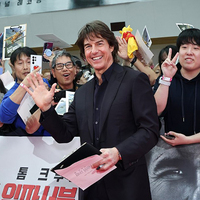
As one executive toldThe Hollywood Reporterearly on in the festival, Weve got Tom Cruise on the red carpet in Cannes and all anyone will want to talk about is Trump and tariffs. (...) Once again hes succeeded in making it all about him.
Movies stuck in customs?
The notoriously politics-averse Cruise steered clear of the subject as he returned to Cannes for hislatest installmentin the Mission: Impossible saga, which was shot in multiple countries all over the world, taking advantage of just the kind of foreign production incentives Trump has in his sights.
Others at the festival have been highly vocal in their criticism of the US president and his plans for the movies. As he picked up a career Palme dOr on the opening night, screen legend Robert De Niro set the tone with ablistering attackon Americas philistine president, urging the industry to join the fight for democracy.
US filmmakers in Cannes have poked fun at the very notion of putting tariffs on moviemaking, questioning the feasibility of Trumps plans.
Does that mean you can hold up the movie in customs? joked Wes Anderson at the press conference for his star-studded competition entry The Phoenician Scheme, which was shot at Studio Babelsberg in Germany.
That's not going to happen, right? The guy changes his mind like 50 times in one day, added RichardLinklater, whose competition entry Nouvelle Vague was shot in France.
He praised the French for protecting their film industry with tax breaks and other incentives.
They make sure its healthy, they help it the government, theyre all in, from production to distribution, Linklater told reporters. The US could use a little bit of that.
Cultural war
While Trumps tariff threats have spooked Europe, his threats to wage war against EU regulations that protect and promote European cinema have caused even greater alarm.
The regulations take many forms but typically include measures such as taxing cinema tickets to fund independent filmmakers, quotas for European or non-English-language productions, or forcing major studios to fund domestic productions.Trump has described them as overseas extortion.
On Sunday, several dozen European filmmakers staged a rally at a beach caf on Cannes iconic boulevard de la Croisette, where they read a declaration denouncing the cultural war waged by the Trump administration. They urged EU decisionmakers not to give up on rules protecting their industry in trade talks with Washington.
The very survival of Europes film industry is at stake here, said French filmmaker Jrome Enrico, one of the sponsors of the declaration signed by the likes of Claude Lelouch and Italys Paolo Sorrentino.
We dont want culture to be treated just like any commodity, he said. Yes, its an industry, but its also an art form, and we cant treat cinema like cars or steel.
Korean no-show
The tariff debate has been less of an issue for the Asian film industries that are always a fixture of the Cannes film market. At the South Korean pavilion, Sejeon Hahn of the Korean Film Council (Kofic) pointed to both structural and cultural differences with Europes film industry.
We havent developed the same culture of cross-border co-productions as Europe, she explained. And we dont have the same instinct to team up with our neighbours when it comes to resisting America.
South Korean cinema is also absorbed by its own problems, Hahn added. For the first time in a quarter of a century, no Korean film has been invited to Canness official line-up this year, in a huge setback for a country that gave us the2019 Palme dOrwith Bong Joon-ho's Parasite and saw Park Chan-wook pick up the Best Director award in 2022 for his Decision to Leave.
The Cannes no-show has sparked soul-searching about a business model in which domestic blockbusters crowd out the arthouse films that have made the industrys global fame, preventing the emergence of new talent.
We need to question our model, and perhaps open up to international co-productions, so that we bounce back stronger, said Hahn.
A blessing in disguise?
The mood was more upbeat at the pavilion housing the Agence Culturelle Africaine (ACA), which supports African film projects and is hailing a strong edition for the continent. Its director, Aminata Diop Johnson, cited the breakthrough success of My Fathers Shadow by Akinola Davies Jr, thefirst Nigerian film to land an official slotin Cannes.
Having a film in the official selection is a strong incentive for countries to send delegations to the festival and boost investment in their film industries, she said, pointing to the nearby Nigerian pavilion, the first in Cannes, where a Nigerian government delegation has unveiled plans to turn the countrys bustling movie sector into a global heavyweight.
Read moreCannes 2025: Nollywood basks in spotlight as Nigerian film finally makes the cut
Diop Johnson played down the threat of US tariffs, suggesting it could be a blessing in disguise for emerging film industries.
After the initial shock of Trumpsannouncement, industry workers immediately started looking for other investors, said the ACA director, who has organised Cannes panels with investors from across the globe.
Reducing our reliance on the US could actually be a good thing.
Brazils Trump imitator
At farewell drinks hosted by film workers from Brazil, the markets "country of honour this year, producers Paula Santos and Lucas Sander drew a parallel between Trumps protectionist plans for cinema and wider geopolitical shifts currently at play.
Filmmakers in Brazil traditionally look to the US for investment. But coming to Cannes has put us in touch with film workers from China, Taiwan and other countries, opening up new possibilities," said Sander. It comes at a time when Brazil is drawing closer to BRICS countries.
First-timers in Cannes, Santos and Sander have been looking for investors to support their first feature Fragilities, a body-horror film. They say a busy week of in-person meetings with industry workers from all continents has made the financial sacrifice worthwhile for their small production company Tauma.
But they remain acutely aware of the political threats weighing over the film world.
We had our own Trump imitator with (former president)Jair Bolsonaro, who dissolved Brazils culture ministry and almost destroyed our film industry, said Santos, who fears the far-right maverick might one day return to power like his US mentor.
Trying to put borders in the movie world, like Trump wants to do, is not just bad for our industry, added Sander. Its also a way of attacking culture and diversity.
Originally published on France24